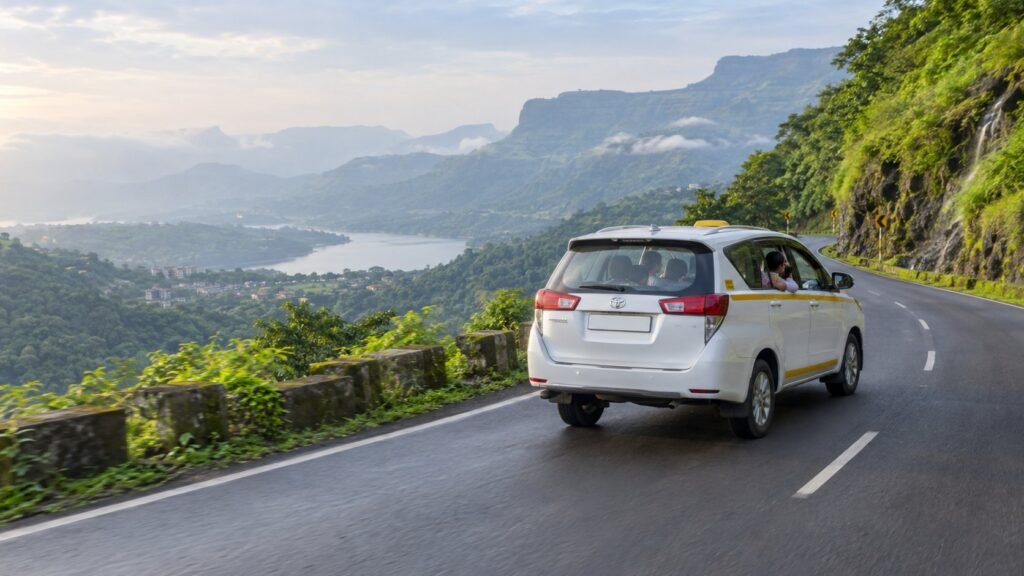
Two people with backpacks and a joint family of twelve do not need the same cab — and in Lonavala, where the day involves hill roads, viewpoint parking, and fort trails, the vehicle you choose shapes the whole trip. Pick too small and everyone arrives tired; pick too large and you are paying for empty seats on narrow ghat roads. Here is a simple way to match the cab to your group and your plan.
Start With Headcount — and Bags
The obvious factor is how many people are travelling, but luggage matters just as much. A couple with overnight bags fits comfortably in a sedan. A family of four with a stroller, snacks, and a change of clothes for the kids will be happier with the extra boot space of an SUV. Count the people, then count the bags honestly, and choose for the larger of the two.
Sedan: The Couple’s and Small-Family Favourite
For two to three travellers, a sedan is usually the sweet spot. It is easy to manoeuvre through Lonavala’s market lanes, simple to park at busy viewpoints, and comfortable for the highway stretch from Mumbai or Pune. If your plan is a relaxed circuit of Tiger Point, Bhushi Dam, and a fort, a sedan handles it all without fuss.
SUV: Room to Breathe
Groups of four to six, or anyone travelling with elders, should look at an SUV. The higher seating makes getting in and out easier on slopes, the extra legroom matters on longer drives, and the larger boot swallows picnic supplies, camera bags, and monsoon gear without a negotiation. On ghat roads, the planted feel of a bigger vehicle is also simply more reassuring for nervous passengers.
Bigger Groups: Travel Together or Split?
Once your group crosses six or seven, the question changes: one larger vehicle or two smaller ones? Travelling together keeps the group in one conversation and one schedule, and a single driver managing one plan. Splitting into two cabs adds flexibility — one group can linger at the fort while the other heads to the market — but it doubles the coordination. For most family groups, staying together in one suitable vehicle makes the day feel like one trip instead of two parallel ones.
Match the Vehicle to the Plan, Not Just the People
Think about what the day actually involves. Mostly viewpoints and market time? Any comfortable option works. Fort visits with elderly parents? Prioritise easy entry and exit. Airport or railway pickup with heavy luggage first? Boot space jumps to the top of the list. Tell the cab provider your rough plan when booking — a good operator will point you to the vehicle that fits the day, not just the headcount.
Comfort Checks Worth Making Before You Book
Whatever the size, a few confirmations go a long way: working air conditioning for the ghat climb, a driver who knows the local roads and parking realities, and clarity on pickup point and reporting time. If anyone in the group gets motion sickness on winding roads, mention it — an experienced hill driver adjusts pace and braking in ways that make a real difference.
Highway Comfort Matters More Than You Think
For most visitors, a Lonavala trip begins and ends with one to two hours on the Mumbai-Pune expressway or the old highway. That is a meaningful part of the day. A vehicle with comfortable seats, good suspension, and steady highway manners keeps everyone fresh for the sightseeing that follows — especially children and elders, who feel a rough ride first.
If anyone in the group has a bad back or needs extra support, say so while booking. Reclining seats and easy step-in height stop being luxuries very quickly on a long day.
One Driver, One Plan
Whichever size you choose, the underrated feature of a day cab is continuity. The same driver learns your group’s pace by the second stop — who likes photos, who needs restroom breaks, who wants to skip the crowds. That familiarity quietly improves the day in ways no vehicle feature list captures.
Conclusion
The right cab for a Lonavala trip is the one that fits your group, your bags, and your plan — nothing more, nothing less. Sedans suit couples and small families, SUVs earn their space with four to six travellers or elders, and bigger groups do best staying together. Choose for comfort, confirm the basics, and the drive becomes part of the holiday instead of the price of it.